
NOTES ON ROSI BRAIDOTTI
– a zine by KTDU students
Each year at UMPRUM, students of Art Theory and History take part in a so-called team project. Spanning two semesters, it provides a space for collaborative work, for exploring both current and overlooked areas of visual culture and beyond, and for experimenting with different formats and genres through which the project can take shape.
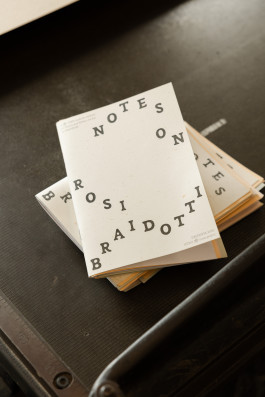
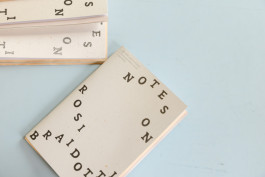
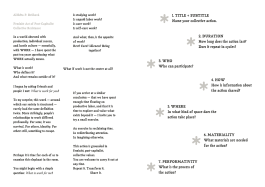
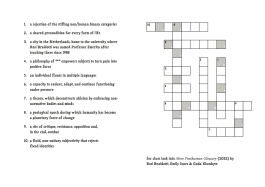
It was out of just such a collaborative effort by us, second-year KTDU students, that the zine Notes on Rosi Braidotti emerged, developed in dialogue with a range of human and more-than-human actors. We are making it available to anyone interested in two versions —as a PDF version optimized for easy online reading and as a version designed for easy printing on a home or school printer.
The zine is inspired by the Feminist Thinkers for Architects initiative, developed at the Royal Institute of Technology in Stockholm under the guidance of Professor Brady Burroughs. Two editions are already freely available online, focusing respectively on the ideas of Audre Lorde and Sara Ahmed.
We chose the Italian philosopher and thinker Rosi Braidotti as our main source of inspiration, with the aim of connecting a critical engagement with her work to the realities of our everyday lives. In developing the zine, feminist theory therefore naturally became intertwined with contemporary artistic, architectural, and social practice. Our work took shape through collective reading, discussions, and shared experiences — from visits to exhibitions and workshops to encounters with activist collectives.
Drawing on our own position within the broader fields of art history, curatorial practice, and visual culture, we decided to expand the project’s original scope beyond architecture. At the same time, we began collaborating with faculty and students from the Gender & Space / Design studio at the Academy of Fine Arts Vienna (AKBILD).
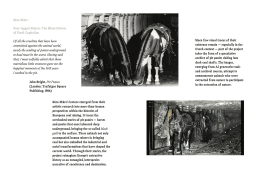
In November, we organized a weekend in Prague for our friends and colleagues from Vienna. We shared a dinner at Kafkárna and, thanks to Lýdia Grešáková and Karolína Plášková, learned about the work of the Spolka and Občina collectives. Together with the Azolla collective, we also took part in a movement workshop specifically engaging with the environment of Elsnicovo Square. Karolína Kripnerová guided us through examples of hostile architecture in central Prague and introduced us to the work of Architects Without Borders. Thanks to Tereza Stejskalová, we had the opportunity to speak with the Prádelna collective and learn about their book Píčou ke zdi. Finally, together with Alžběta P. Brůhová, we reflected on precarity and working conditions in the fields of art and architecture, and attended Sára Märc’s lecture Four-Legged Miners: Agents of Fossil Capitalism, which presented artistic research exploring more-than-human perspectives on the history of coal mining.
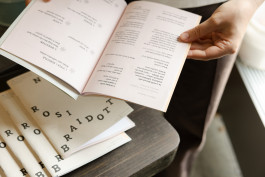
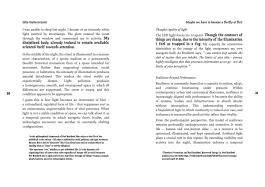
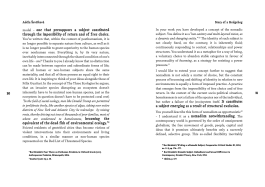
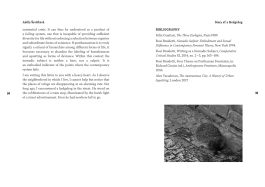
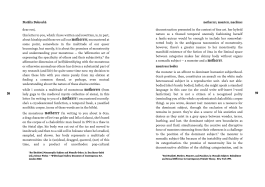
The texts collected in the zine take a variety of forms, ranging from personal reflections and essays to practical guides, and invite readers to explore, question, and actively engage in critical feminist practice. We each selected concepts, terms, and themes from Rosi Braidotti’s writings according to our own interests and developed them further in our contributions, whether in relation to personal experience or to issues that resonated with us. In keeping with the activist nature of feminist discourse, the zine also includes participatory exercises and practical instructions drawn both from the students’ texts and from workshops we took part in.
The zine would have been much more difficult to realize without the wholehearted commitment of project leader Klára Brůhová. She supported us not only on the organizational side, ensuring that the course ran smoothly and making our trip to Vienna possible, but also by encouraging us and keeping the team going whenever morale began to flag.
Our thanks also go to everyone else who helped us bring the zine together. Among them, we would especially like to mention KTDU doctoral student Monika Drlíková, whose own research has long engaged with the thought of Rosi Braidotti. She contributed an excellent introduction to the zine, highlighting the significance of Braidotti’s work for the contemporary humanities. She also captured the essence of the texts collected in the zine with particular clarity: “The texts gathered in the zine reflect an effort to rethink inherited categories, cross disciplinary boundaries, and remain attentive to forms of life, relationships, and ways of knowing that extend beyond a traditional humanist perspective. Perhaps this is precisely what Rosi Braidotti’s thought can offer art history, the art world, and related fields today: not a stable set of answers, but a form of critical sensitivity capable of generating new questions, connections, and possibilities for thought.”
We hope you find the zine inspiring!
On behalf of the UMPRUM team project Adéla Ševčíková, Anna Sýsová, Kateřina Matějková, Hana Kurková, Lilia Gutierrezová, Johana Felixová, Natália Dobrocká, Klára Brůhová
Concept Klára Brůhová (UMPRUM), Petra Hlaváčková (AKBILD), Nicole Sabella (AKBILD) / na základě konceptu Brady Burroughs (KTH)
Editing and introductory chapters Klára Brůhová, Monika Drlíková
Translation and proofreading Natália Dobrocká
Graphic design and typesetting Jiří Královec, Adéla Ševčíková
Cover and poster design Lilia Guttieréz
The zine Dear Rosi Braidotti was created as part of the “Notes on Rosi Braidotti” team project at the Academy of Arts, Architecture, and Design in Prague (UMPRUM) during the 2025/2026 academic year.
NOTES ON ROSI BRAIDOTTI
– a zine by KTDU students
Each year at UMPRUM, students of Art Theory and History take part in a so-called team project. Spanning two semesters, it provides a space for collaborative work, for exploring both current and overlooked areas of visual culture and beyond, and for experimenting with different formats and genres through which the project can take shape.
It was out of just such a collaborative effort by us, second-year KTDU students, that the zine Notes on Rosi Braidotti emerged, developed in dialogue with a range of human and more-than-human actors. We are making it available to anyone interested in two versions —as a PDF version optimized for easy online reading and as a version designed for easy printing on a home or school printer.
The zine is inspired by the Feminist Thinkers for Architects initiative, developed at the Royal Institute of Technology in Stockholm under the guidance of Professor Brady Burroughs. Two editions are already freely available online, focusing respectively on the ideas of Audre Lorde and Sara Ahmed.
We chose the Italian philosopher and thinker Rosi Braidotti as our main source of inspiration, with the aim of connecting a critical engagement with her work to the realities of our everyday lives. In developing the zine, feminist theory therefore naturally became intertwined with contemporary artistic, architectural, and social practice. Our work took shape through collective reading, discussions, and shared experiences — from visits to exhibitions and workshops to encounters with activist collectives.
Drawing on our own position within the broader fields of art history, curatorial practice, and visual culture, we decided to expand the project’s original scope beyond architecture. At the same time, we began collaborating with faculty and students from the Gender & Space / Design studio at the Academy of Fine Arts Vienna (AKBILD).
In November, we organized a weekend in Prague for our friends and colleagues from Vienna. We shared a dinner at Kafkárna and, thanks to Lýdia Grešáková and Karolína Plášková, learned about the work of the Spolka and Občina collectives. Together with the Azolla collective, we also took part in a movement workshop specifically engaging with the environment of Elsnicovo Square. Karolína Kripnerová guided us through examples of hostile architecture in central Prague and introduced us to the work of Architects Without Borders. Thanks to Tereza Stejskalová, we had the opportunity to speak with the Prádelna collective and learn about their book Píčou ke zdi. Finally, together with Alžběta P. Brůhová, we reflected on precarity and working conditions in the fields of art and architecture, and attended Sára Märc’s lecture Four-Legged Miners: Agents of Fossil Capitalism, which presented artistic research exploring more-than-human perspectives on the history of coal mining.
The texts collected in the zine take a variety of forms, ranging from personal reflections and essays to practical guides, and invite readers to explore, question, and actively engage in critical feminist practice. We each selected concepts, terms, and themes from Rosi Braidotti’s writings according to our own interests and developed them further in our contributions, whether in relation to personal experience or to issues that resonated with us. In keeping with the activist nature of feminist discourse, the zine also includes participatory exercises and practical instructions drawn both from the students’ texts and from workshops we took part in.
The zine would have been much more difficult to realize without the wholehearted commitment of project leader Klára Brůhová. She supported us not only on the organizational side, ensuring that the course ran smoothly and making our trip to Vienna possible, but also by encouraging us and keeping the team going whenever morale began to flag.
Our thanks also go to everyone else who helped us bring the zine together. Among them, we would especially like to mention KTDU doctoral student Monika Drlíková, whose own research has long engaged with the thought of Rosi Braidotti. She contributed an excellent introduction to the zine, highlighting the significance of Braidotti’s work for the contemporary humanities. She also captured the essence of the texts collected in the zine with particular clarity: “The texts gathered in the zine reflect an effort to rethink inherited categories, cross disciplinary boundaries, and remain attentive to forms of life, relationships, and ways of knowing that extend beyond a traditional humanist perspective. Perhaps this is precisely what Rosi Braidotti’s thought can offer art history, the art world, and related fields today: not a stable set of answers, but a form of critical sensitivity capable of generating new questions, connections, and possibilities for thought.”
We hope you find the zine inspiring!
On behalf of the UMPRUM team project Adéla Ševčíková, Anna Sýsová, Kateřina Matějková, Hana Kurková, Lilia Gutierrezová, Johana Felixová, Natália Dobrocká, Klára Brůhová
Concept Klára Brůhová (UMPRUM), Petra Hlaváčková (AKBILD), Nicole Sabella (AKBILD) / na základě konceptu Brady Burroughs (KTH)
Editing and introductory chapters Klára Brůhová, Monika Drlíková
Translation and proofreading Natália Dobrocká
Graphic design and typesetting Jiří Královec, Adéla Ševčíková
Cover and poster design Lilia Guttieréz
The zine Dear Rosi Braidotti was created as part of the “Notes on Rosi Braidotti” team project at the Academy of Arts, Architecture, and Design in Prague (UMPRUM) during the 2025/2026 academic year.